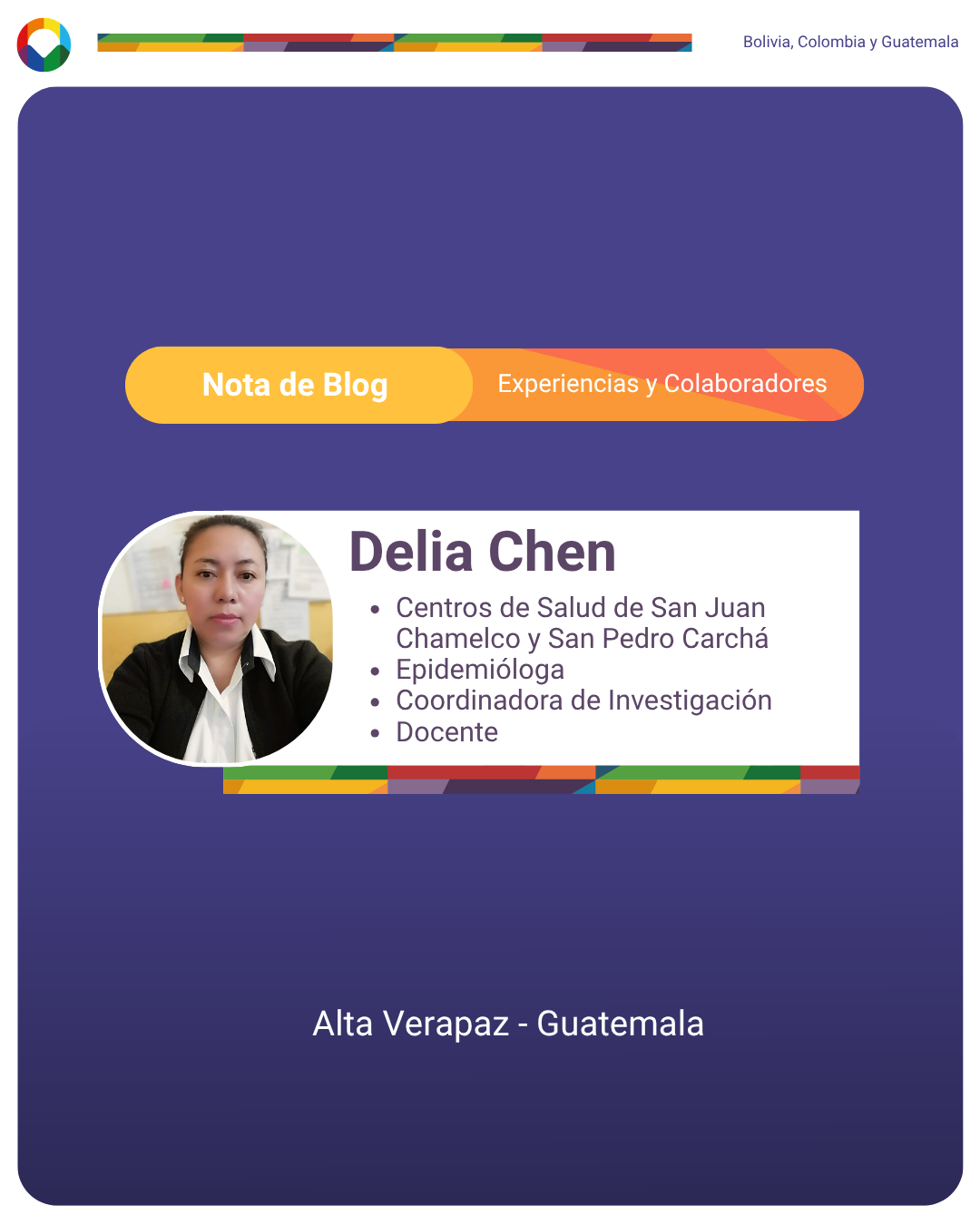
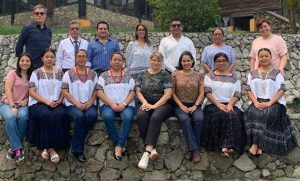
 Delia Chen is a registered nurse, epidemiologist, and university lecturer. She currently collaborates with the NIHR Latin America Centre as a researcher and Research Coordinator in Guatemala, leading the LEAP group (Lived Experience and Shared Experiences Group) in Alta Verapaz.
Her work takes place both in local health centres and in academic settings, where she also supports students in training and other team members in research processes. From this dual territorial and scientific perspective, her experience helps illustrate how the Centre’s work translates into tangible changes within communities, integrating health, culture, and community participation.
Centre activities: health, community, and culture in the territory
In Alta Verapaz, the Centre’s work is carried out in a context where non-communicable diseases (NCDs) represent a significant burden for the population.
“Hypertension and diabetes mellitus are among the leading causes… these are diseases that can be prevented. However, people are seeking health services very late.”
In response to this reality, the Centre has promoted an approach that goes beyond clinical care, incorporating community-based support, active participation, and the use of local cultural resources.
One of the most impactful changes has been the integration of caregivers into the care process:
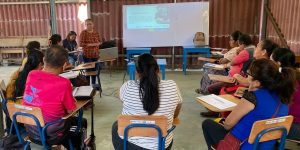
“Health services are now showing an interest in ensuring that patients do not come alone, but with a family member or someone close to them.”
“The doctor also takes the opportunity to guide the caregiver on the care they should provide… from medication reminders to diet.”
Through community groups, spaces for exchange have been created where patients and caregivers share experiences and strengthen relationships:
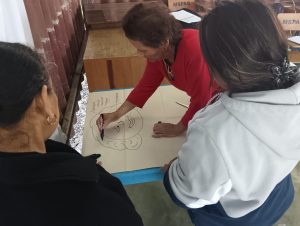
“[With the LEAP group] we do role-reversal exercises… listening to the experience of someone living with the disease is completely different from listening to the experience of the caregiver.”
This work has also been complemented by initiatives such as volunteering and the development of a catalogue of artistic and cultural resources in municipalities such as San Juan Chamelco and San Pedro Carchá.
These actions have made it possible to connect the management of NCDs with meaningful cultural and community activities, strengthening participation and social connection within the territories.
In addition, this collective work continues beyond in-person meetings:
“Even though our meetings take place from time to time, we stay in touch through WhatsApp.”
Impact of the Centre in Alta Verapaz: transforming the experience of health
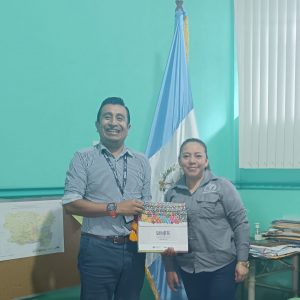 The impact of the Centre in Alta Verapaz is reflected both in people and in health services.
From the patients’ perspective, one of the most noticeable changes is how they are being attended:
“Patients tell us that the doctor who has been treating them now pays more attention… it is no longer that rushed consultation.”
Care has also become more comprehensive:
“They have had the opportunity to be heard by a psychologist… now our care is more holistic.”
These changes have a direct effect on people’s wellbeing:
“These are patients I see doing well… I see them walking, smiling, with a positive attitude.”
The community-level impact is also evident in the active role of caregivers and the strengthening of support networks:
“The caregiver becomes an ally… because they are the one who follows up on care at home.”
Likewise, initiatives such as peer support, volunteering, and cultural activities promoted through SanArte have contributed to creating spaces for interaction, participation, and support that strengthen community connections.
The impact has been such that even healthcare staff have shown interest in adopting these approaches:
“They have told us: we want to understand the caregiver’s experience… they want to try this as well.”
For Delia, this reflects a deeper transformation in how healthcare is understood:
“They have realised that there is more that can be done… that we should not just stick to guidelines.”
The impact of the Centre on Delia: a professional and academic transformation
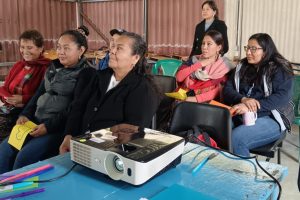
Delia’s experience with the Centre has also transformed her professional trajectory, expanding her understanding of health and her practice.
“Before, I only saw health as physical health… now I have learned that health is multidimensional.”
Direct engagement with communities has been central to this shift:
“I have more contact with reality… this has allowed me to see health from a different perspective.”
At a professional level, she recognises significant growth:
“Perhaps I had qualities that I had not been able to develop… now I feel more complete as a professional.”
Her relationship with research has also evolved:
“Not seeing research as something tedious, but as a friendly tool… something that comes from curiosity.”
She now also supports students and team members, integrating research with practical work in the field.
In her own words:
“The Centre has allowed me to see that dimension… to understand people’s health from a different perspective.”
A community-centred approach to health
The experience in Alta Verapaz shows how the work of the NIHR Latin America Centre integrates research, community, and culture to address NCDs in a more holistic way.
Through initiatives such as community groups, peer support, volunteering, and strategies like SanArte, the Centre not only generates evidence but also strengthens networks, promotes participation, and builds new ways of understanding care.
An approach that recognises that health does not occur only within health services, but also in everyday life, within communities, and in the relationships that are built within them.