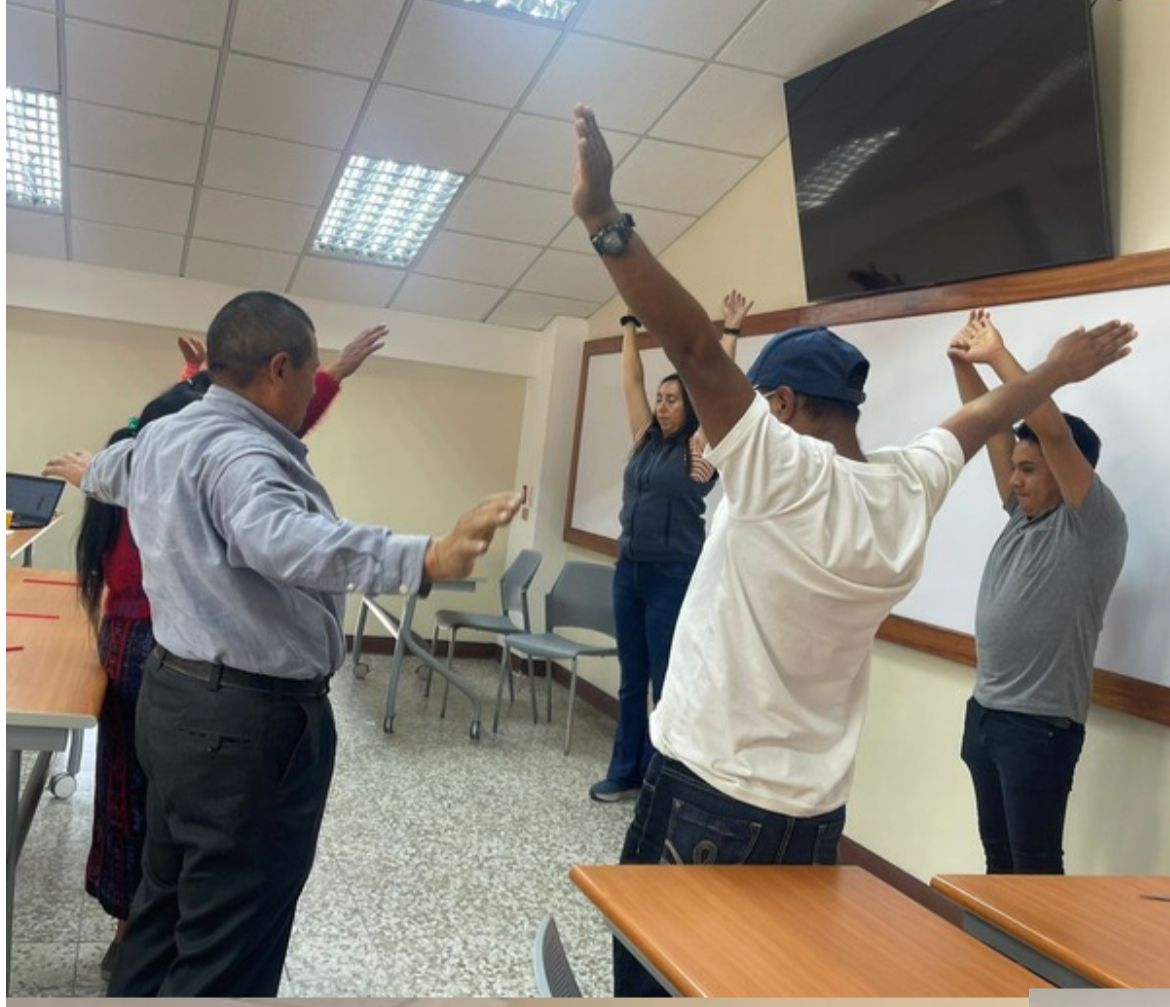
The NIHR Latin America Centre (NIHR LatAm Centre) has completed the implementation of the Multifamily Protocol, a community-based research initiative developed in Latin America with the aim of exploring innovative psychosocial support strategies from a family- and community-centered perspective. This protocol is part of the Centre’s commitment to generating context-specific scientific evidence that responds to the social, cultural, and territorial realities of the region.
In contexts shaped by structural inequalities, limited access to health services, and a high burden of disease, families play a central role in care, support, and recovery processes. The Multifamily Protocol emerges from this premise, recognizing families and communities as key actors in health, well-being, and coping processes, particularly in relation to mental health and the psychosocial impact of Non-Communicable Diseases.
 What is the Multifamily Protocol?
The Multifamily Protocol is a research-oriented community intervention designed to bring together multiple families in facilitated group spaces where dialogue, shared experiences, and the collective construction of coping strategies are encouraged. Unlike traditional individual-based approaches, this model places family dynamics, support networks, and shared lived experience at the center of the process.
From the perspective of the NIHR LatAm Centre, the protocol was conceived not only as an intervention, but as a qualitative research process aimed at assessing its feasibility, acceptability, and cultural relevance across different Latin American contexts, specifically in Colombia, Bolivia, and Guatemala. Through this process, the research sought to understand how families experience the multifamily approach, the meanings they attribute to it, and the factors that facilitate or hinder its implementation.
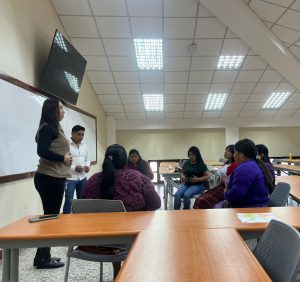
One of the core pillars of the Multifamily Protocol is its community-based approach. Multifamily sessions were developed as safe spaces for collective engagement, where families could share experiences, reflect together, and strengthen bonds both within each family and among families from the same community.
This approach recognizes that many responses to health and well-being challenges are found not only within health systems, but also through social connection, mutual support, and community participation. The protocol made it possible to observe how these collective spaces can help reduce isolation, strengthen family communication, and foster a sense of belonging.
Regional implementation within the NIHR LatAm Centre
The Multifamily Protocol was implemented across the three countries that form the NIHR Latin America Centre: Colombia, Bolivia, and Guatemala, adapting to local contexts and the sociocultural characteristics of each territory. This regional implementation allowed for the
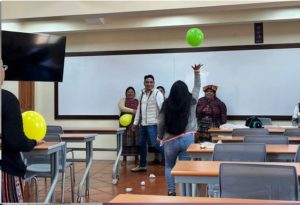
comparison of experiences, the identification of shared lessons, and the documentation of the diverse ways in which families engage with this type of intervention.
The research was conducted under rigorous ethical principles and followed a qualitative methodology that included the systematization of experiences, observations, and feedback spaces with participants, contributing to a deeper understanding of the process.
The case of Guatemala: multifamily work across different territories
In Guatemala, the Multifamily Protocol was implemented in Quetzaltenango, in accordance with the approved protocol. The implementation considered both urban and rural settings, acknowledging the country’s cultural, linguistic, and social diversity
.
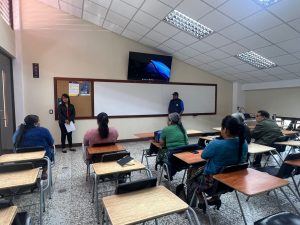
Multifamily sessions brought together families from the municipalities of Cantel and Quetzaltenango, who partici
pated voluntarily in periodic meetings facilitated by trained teams. Throughout the process, families shared experiences related to caregiving, coexistence, coping with challenges, and the impact of health conditions on everyday life.
These experiences made it possible to document how the multifamily approach can be adapted to different Guatemalan contexts and how families value these spaces as
opportunities to feel supported, heard, and part of a broader community network.
 The completion of the Multifamily Protocol represents a significant step forward for the NIHR LatAm Centre in generating evidence on family-centered community interventions. The learnings derived from this process provide valuable inputs for future research, as well as for the design of programs and policies that recognize the role of families and communities in health and well-being.