
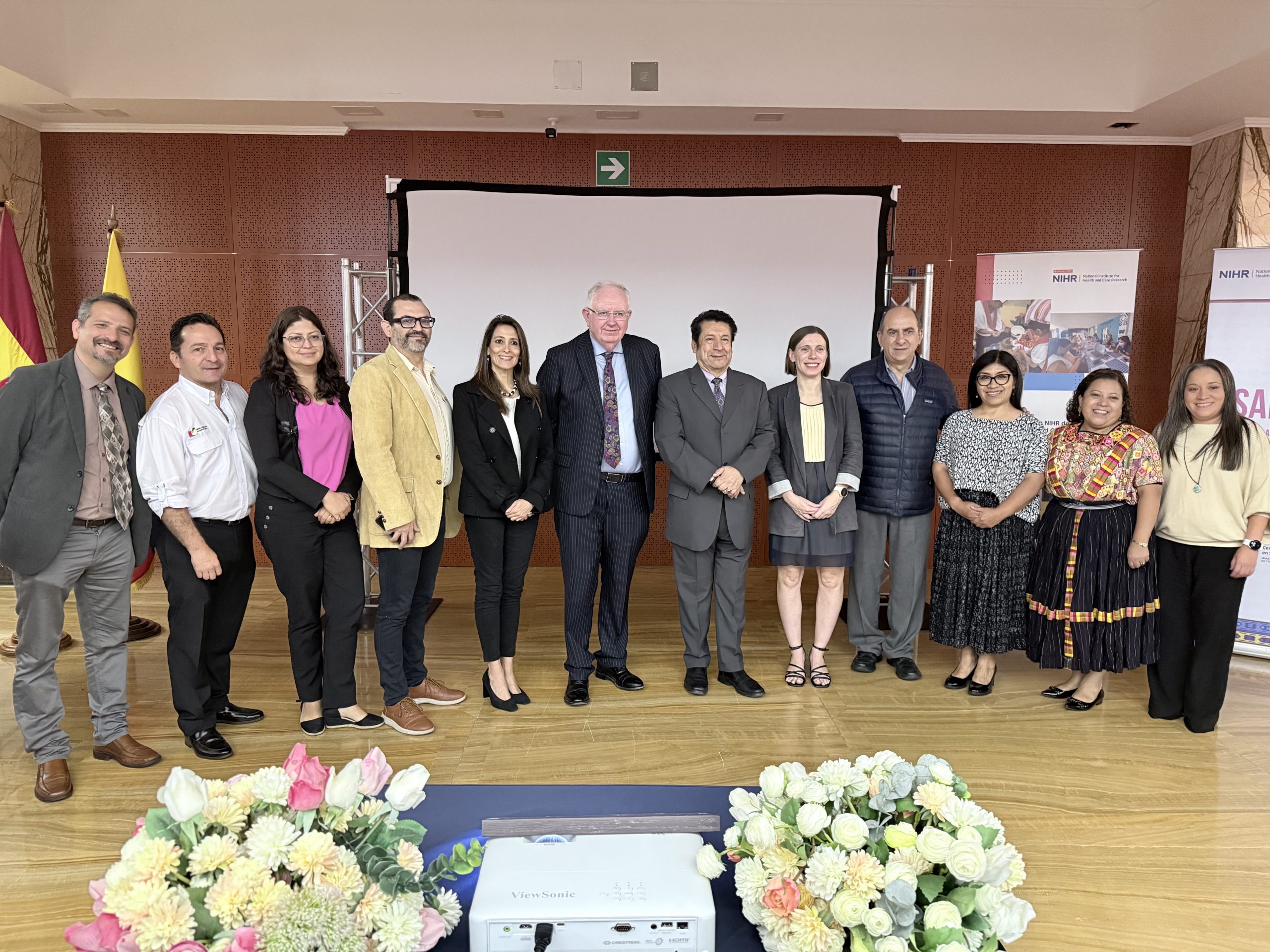
In November 2025, Guatemala hosted the NIHR LatAm Meeting, a regional collaboration space that brought together researchers from Guatemala, Colombia, Bolivia, and the United Kingdom. With the presence of Sir Mark Caulfield and Dr. Victoria Bird, the meeting combined academic ceremonies, conferences, training sessions, and the launch of the SanArte Catalogue, strengthening the mission of the NIHR LatAm Centre to promote interdisciplinary research, education, and community-based work in health.
 This year, Guatemala became a meeting point for the teams that make up the NIHR LatAm Centre. The goal of the gathering was to strengthen scientific collaboration between Guatemala, Colombia, Bolivia, and the United Kingdom, and to share learnings, results, and experiences generated across the different territories where the Centre operates.
The host team—the NIHR LatAm Centre – Guatemala—welcomed high-level guests, including Sir Mark Caulfield, one of the United Kingdom’s most influential researchers in genomics and precision medicine, and Dr. Victoria Bird, Principal Investigator of the NIHR LatAm Centre. Also in attendance were Dr. Lucía Alvarado, Country Manager for Bolivia, and the Principal Investigators from the partner countries: Dr. Gómez Restrepo from Colombia and Dr. Tapia from Bolivia, as well as academic authorities from the Faculty of Health Sciences at Universidad Rafael Landívar. The meeting marked a key moment for consolidating the Centre’s vision: interdisciplinary research, community engagement, and continuous training in service of public health in Latin America.
The gathering began with the White Coat Ceremony at Universidad Rafael Landívar, a solemn moment in which medical students receive the coat that marks the beginning of their clinical training. The participation of international teams and invited researchers underscored the importance of ethical leadership, social responsibility, and the value of research as an integral part of medical education. This event strengthened the partnership between the Centre and the Faculty of Health Sciences and highlighted the project’s commitment to higher education and the training of future health professionals.
One of the most significant moments of the meeting was the Launch of the SanArte Catalogue, the first research product of the NIHR LatAm Centre – Guatemala. The event brought together authorities, researchers, and representatives from invited institutions. The methodological processes, participatory mapping in Alta Verapaz, and the artistic and cultural resources identified as tools for promoting emotional wellbeing were presented. The launch demonstrated how the Centre’s research translates into concrete, culturally relevant products with potential application in public health interventions, reinforcing the value and impact of the funding received.
 Several academic conferences further enriched the programme. Sir Mark Caulfield delivered sessions on research leadership and on the emerging role of artificial intelligence in medicine, opening a space for reflection on innovation, ethics, and the future of healthcare. Dr. Victoria Bird presented on research as a transformative force within health systems and facilitated technical training sessions for the Centre’s team, focused on the implementation of regional protocols. These activities strengthened internal capacities, promoted knowledge exchange, and reinforced the collaborative vision of the project.
The meeting concluded with a cross-learning session led by Dr. Bird, with participation from professionals and academic staff. This space helped connect research with health education, highlighting the importance of continuous learning and regional exchange among partner countries. Altogether, the activities carried out directly aligned with the objectives of the NIHR LatAm Centre: rigorous research, quality education, ongoing evaluation, and community engagement. The programme demonstrated the project’s commitment to producing applicable knowledge, strengthening local capacities, and contributing to the wellbeing of communities across Latin America.